A driver-based benchmarking tool to assess the foundational conditions that enable cities to compete over the long term.


A driver-based benchmarking tool to assess the foundational conditions that enable cities to compete over the long term.
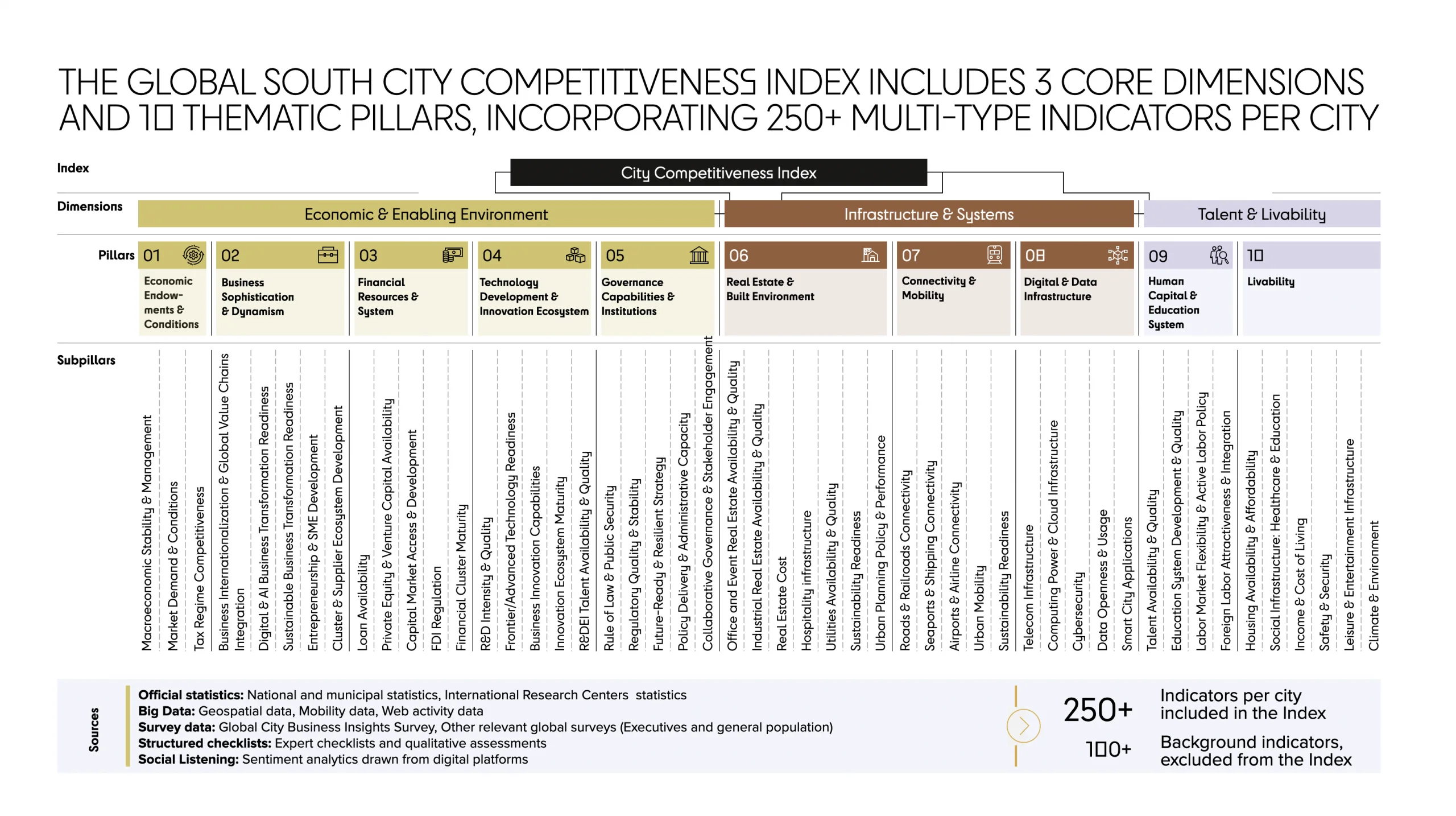
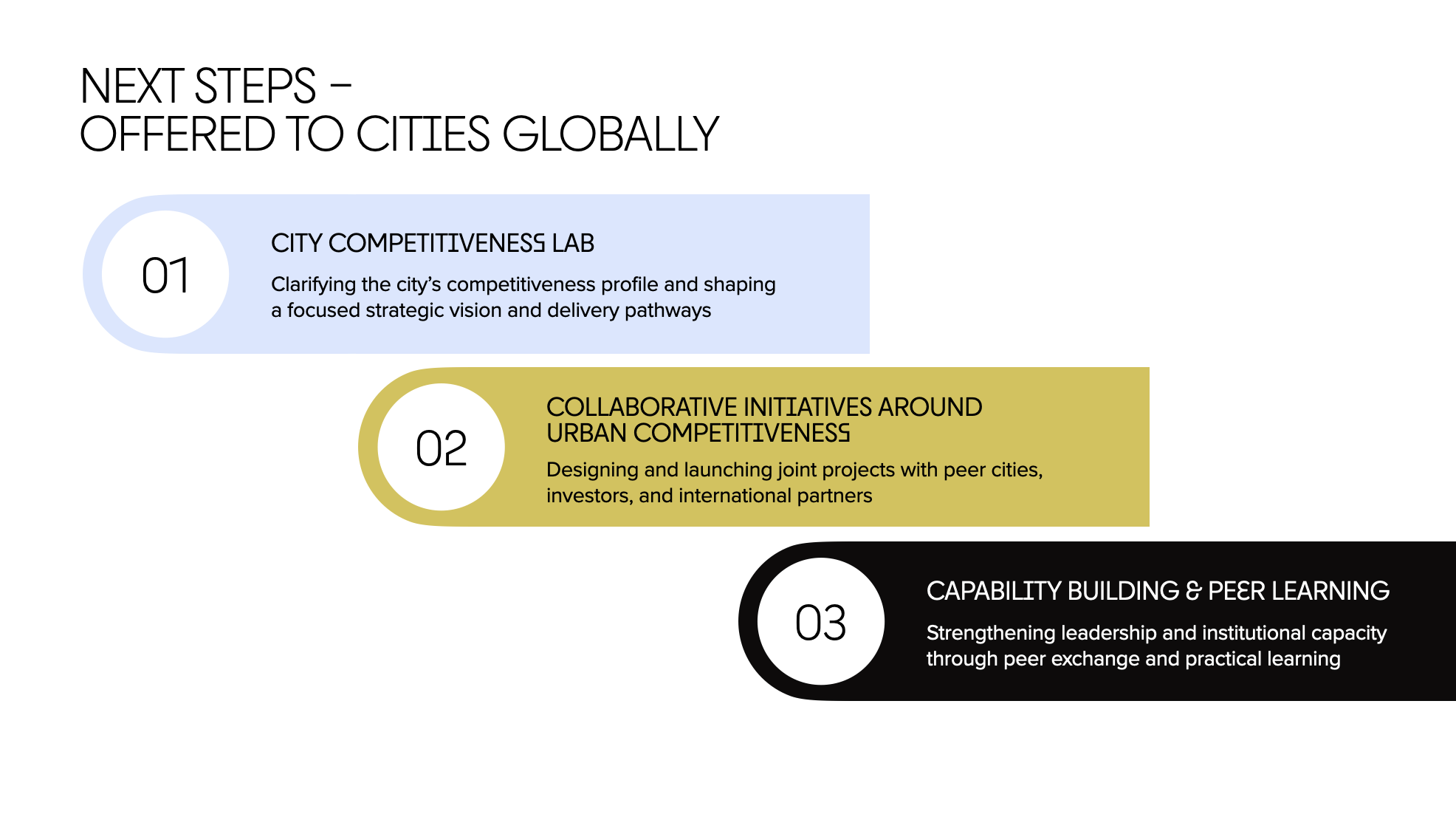
Global South Cities Index and Report is a global project on city competitiveness in the next economy.
It is a multilayered urban intelligence tool covering 41 Global South cities and 9 Global North cities.
The Index evaluates cities across three interlocking pillars: urban competitiveness, business environment, and investment attractiveness – using over 250 traditional and new-economy indicators, 25 million datapoints drawn from big-data sources, and social listening analysis of more than 2 million posts and messages.

The Future-Proof Governance Assessment Framework helps governments assess their readiness for the future, identify capability gaps, and build more adaptive, data-driven, and resilient governance systems.
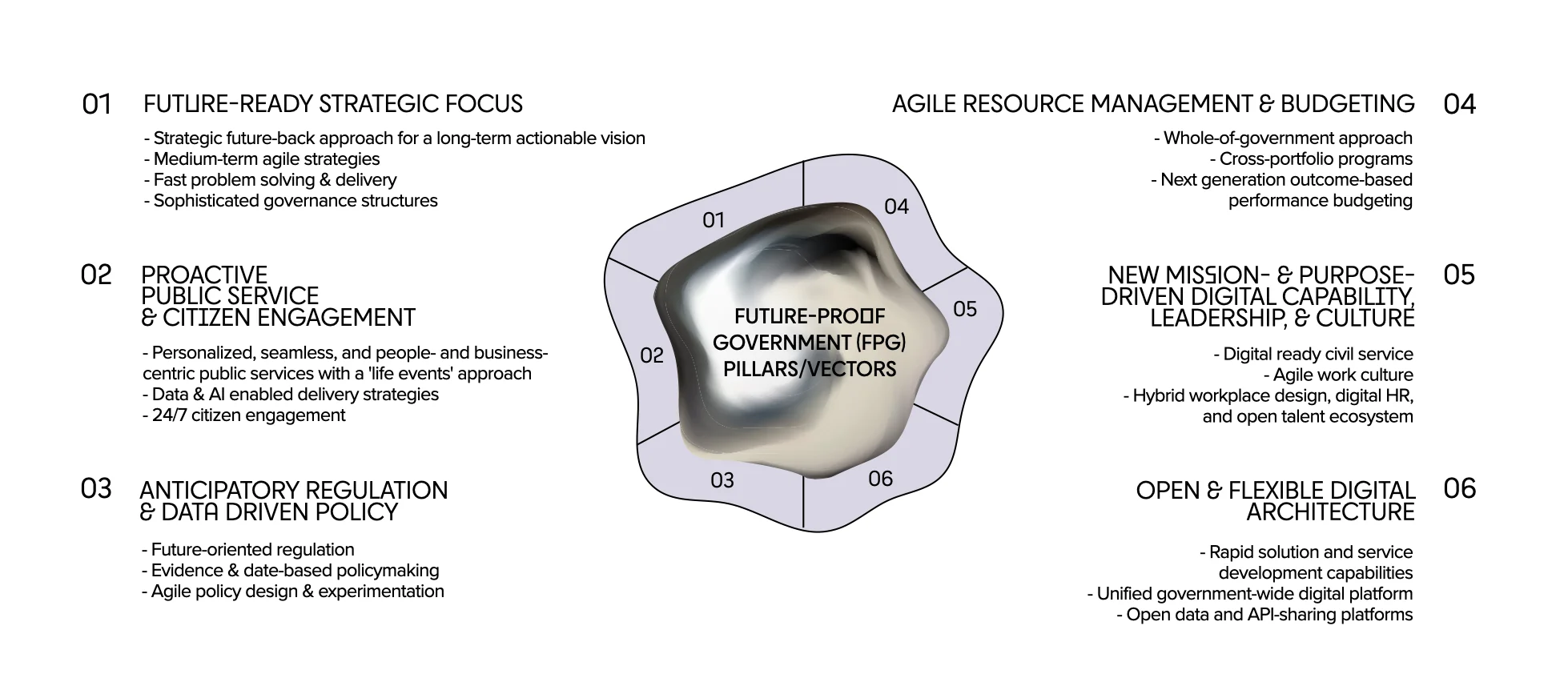
Assess and enhance a government’s readiness to navigate complexity, uncertainty, and rapid transformation
Evaluate governance capabilities across key pillars through document analysis, stakeholder interviews, data review, and public sector surveys
Compare performance with international peers to identify gaps, strengths, and positioning within global best and emerging practices
Define a clear “current state” vs. “future ambition” and map critical capability gaps
Facilitate high-level sessions and expert workshops to align on priorities, ambition, and transformation pathways
Deliver tailored recommendations, capacity-building priorities, and implementation pathways grounded in foresight and real-world examples
Produce internal and public-facing reports to guide decision-making and position the country within next-generation governance discourse
Working with local partners and indigenous elders in 12 countries and 15 bioregions, the initiative aims to resolve long-standing conflicts, deliver early local solutions, and unlock place-based potential.
A newly formed institute focused on building new capabilities in investment and governance leaders to transition single assets, portfolios, funds and places, delivering verifiable systemic impacts across ecologies, economies, societies, and cultures.

WIRCS is a newly formed institute focused on building new capabilities in investment and governance leaders to transition single assets, portfolios, funds and places, delivering verifiable systemic impacts across ecologies, economies, societies and cultures.
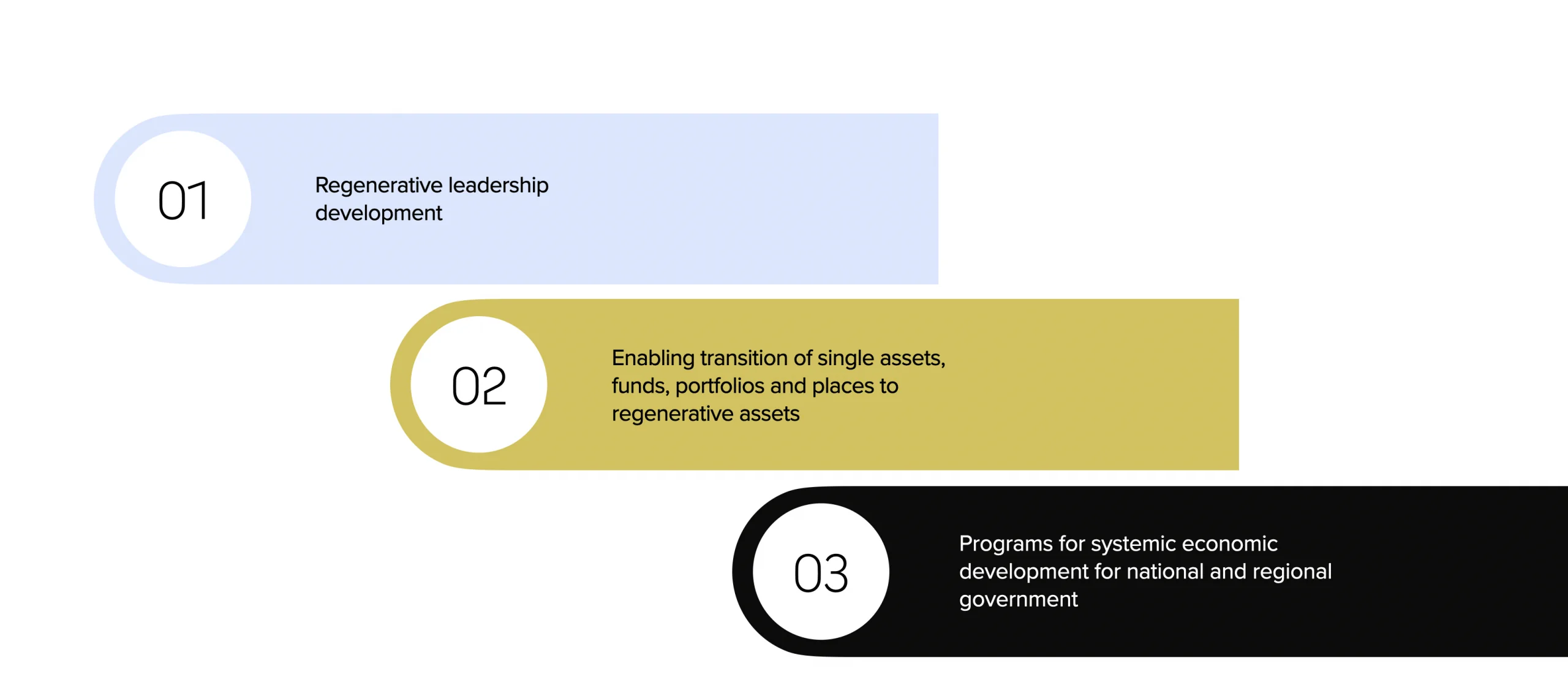
At least 51% of board and C-suite leaders complete the Regenerative Leaders Certification, building clarity on nested systems and systemic potential.
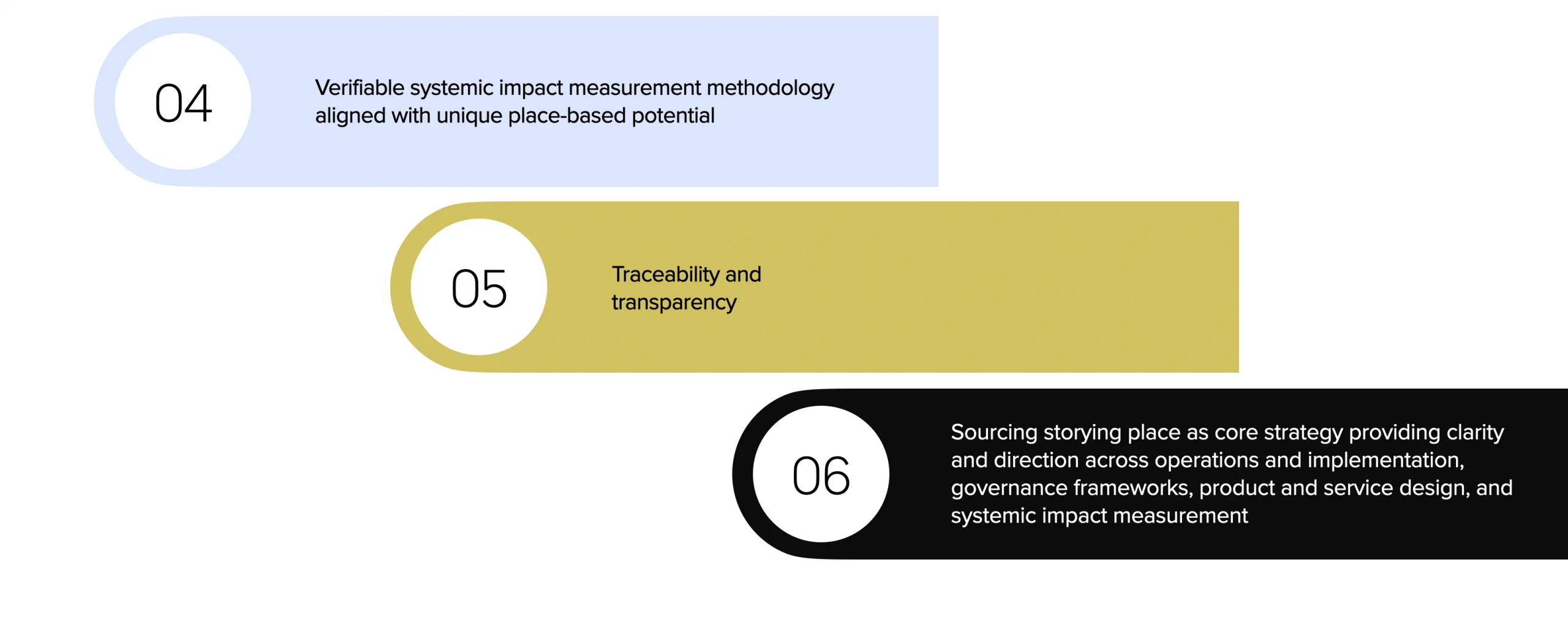
Systemic impacts are transparently tracked, reported, and audited using regenerative methodologies and approved technologies.
Regenerative methodologies are applied across core strategy, implementation, investment, product and service design, and governance processes.
Measurable impacts are achieved across economic, ecological, social, and cultural-heritage systems.